Play With Your Food
Feed (v.): to nourish, consume, supply, encourage; (n.): fodder or sustenance, a broadcast, a stream, mechanism for carrying forward

I am ravenous for words. I search for them, collect them, feel them. I taste them. I chew them. I take them apart, put them together, consume, consume, consume them. Sometimes I spit out a poem. I like to play with my food.
Why do people write about food? It’s nourishing, essential to life, sensory, and satisfying. Without it, we starve. Too much of it, and our bodies are overwhelmed. Food is social, cultural, nostalgic. We relive memories through a bite of grandma’s famous ____. Then, she’s no longer with us. We try replicating the recipe. If we’re lucky, she wrote it down. If not, at least we watched her make it a thousand times. We might come close, but it’s never the same. It makes us sad. Is this a bad thing?
It’s hard for me to enjoy dining at Cuban restaurants. I take it personally when the beans are bland. I had the best of the best, and now it’s gone. Nothing compares to mis abuelos’ cooking. Nothing. It would be easy for me to get stuck in nostalgia, but in attempting to cook from memory, the past releases its hold.
Sometimes, I am angry at the past. I am angry about the things that were written down, and the things that weren’t. I am angry about the ingredients that were left out. I am angry at the people who left me alone with a mess in the kitchen. I use my biggest, sharpest knife, and I chop, I chop, I chop. I write. We can’t keep doing things the same way forever.
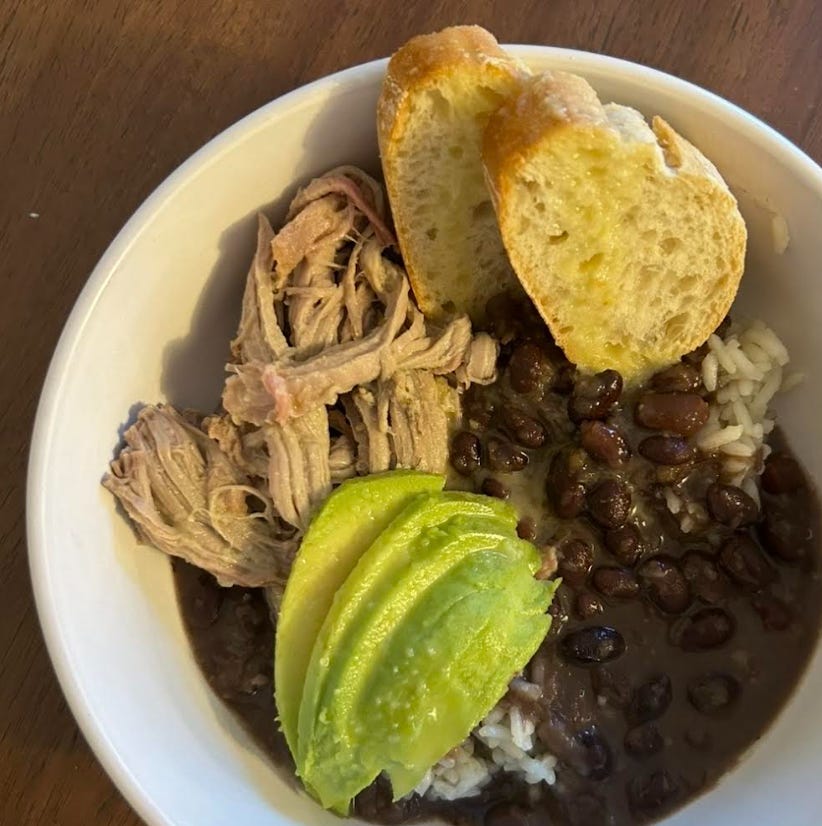
Like writing, cooking can be a channel for grief. It’s also a way to let go of perfectionism, embrace change, feed relationships. Food tells its own story. I add extra olive oil to the frijoles along with my abuela’s secret ingredient. I think about her stirring the pot. I serve my friend a bowl. These are my beans. They taste even better tomorrow.
You will find blackout poems sprinkled throughout my book. These poems were created using traditional Cuban recipes–dishes that I remember eating as a child. It gave me a thrill to play with the language and discover what was hiding inside.
You can play with your food, too. There are many ways to tell our stories through food. Here are a few ideas to try:
Shop thrift stores for an old cookbook (think Cooking Light from the 90s). Play around and create Blackout Poems with the recipes. Cut out words from the recipes and create a Collage Poem. Have fun and don’t worry about perfection. Don’t even worry about it making sense. Let your instincts take over.
Write a Recipe Poem. Use the recipe as a vehicle for your memory, or as a tribute to a family member. Read Patricia Smith’s “When the Burning Begins” for inspiration.
Write about a dish you associate with home or a loved one, without using the word “comfort” or naming the dish itself. What memories or feelings does this bring up for you?
Try writing about food without describing the taste. Use your other senses to explore and describe the food.
Do you have other ideas or examples? Share, please!
Finally, dig out your old cookbooks and really read them. What stories do they tell?
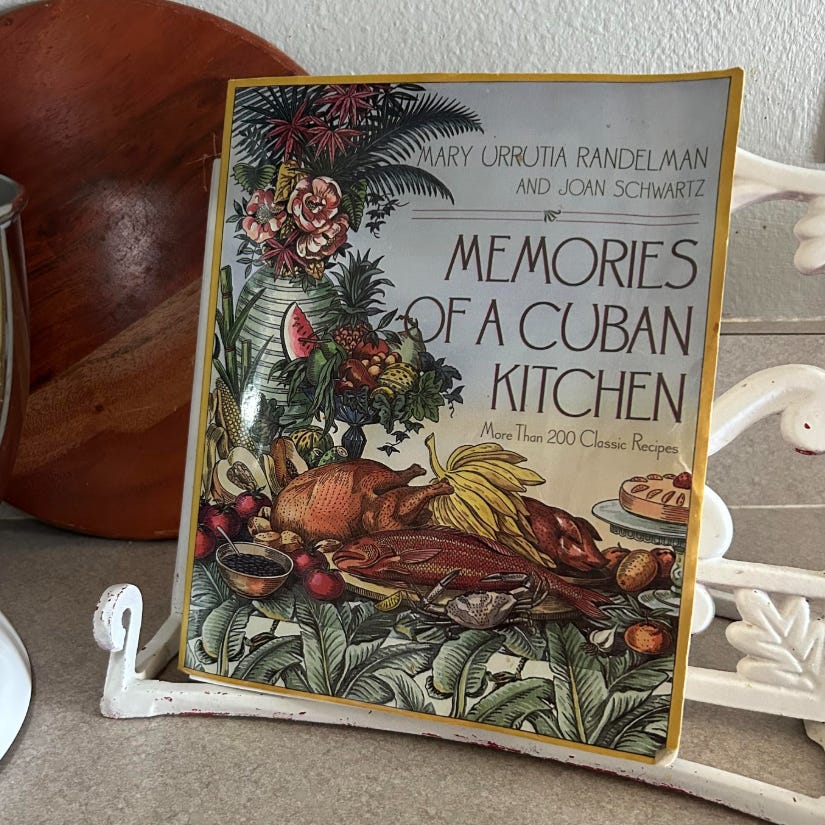
If you’d like to try making Cuban cuisine, Mary Urrutia Randelman’s Memories of a Cuban Kitchen is my favorite. My copy is warped and stained from many uses. It comes the closest to mis abuelos’ recipes, which are mostly unwritten and live in my memory. (Look closely at the blackout poems in my book, and you may recognize some of these!)